Look at a map. Bristol sits with Somerset at its back and Herefordshire up the river — two of the great cider counties of England — and for centuries the city has been where farmhouse cider met a thirsty port. The result is a drinking culture that takes cider seriously in a way most British cities simply don't: not as a sweet thing in a bottle with ice, but as a farm product with terroir, tannin and a kick.
The famous pubs
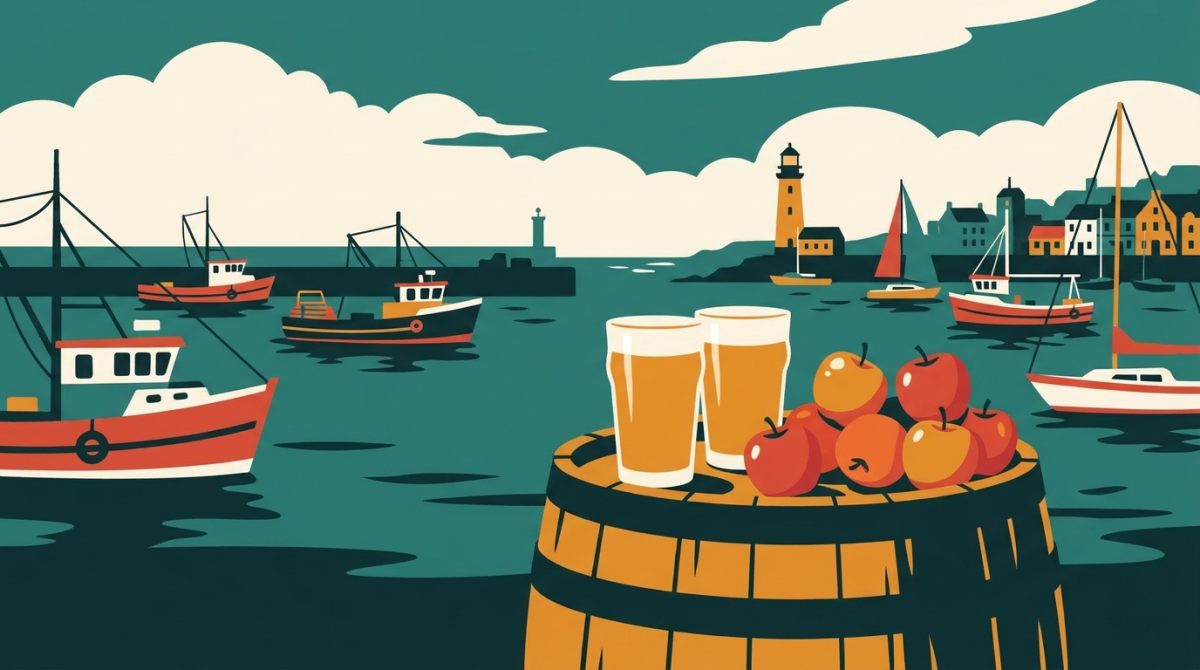
- The Apple A converted boat moored on Welsh Back, a minute or two behind King Street, and probably the first name anyone in Bristol gives when you ask about cider. Its reputation rests on range — a long list running from accessible to agricultural — drunk on deck over the water. On a summer evening it's one of the best places to be in the city, full stop.
- The Coronation Tap Up in Clifton, and a genuine institution — a cider house of the old school that's been serving the neighbourhood for a very long time. The legend attaches to its famously strong house cider, which has a city-wide reputation for ending evenings rather earlier than drinkers intended; local wisdom says to treat it with respect and let the bar staff guide the measures. Go once, at minimum.
- The Orchard Inn A small pub on Spike Island near the SS Great Britain, known for one of the longest farmhouse cider lists in Bristol. The harbourside walk's natural cider stop, and a fixture in our Floating Harbour guide.
As ever: these are third-party pubs, hours and offerings shift, and pilgrimages deserve certainty — check each pub's own site before you set out.
What makes West Country cider different
The commercial cider most people grow up on is made for sweetness and fizz. The West Country tradition is another drink entirely. It starts in the orchard, with bittersweet and bittersharp cider apples — varieties grown for tannin as much as sugar — and it shows in the glass: drier, more structured, sometimes still rather than sparkling, often cloudy, and habitually stronger than it tastes, which is where most cautionary tales begin.
It's also a farm product in a way that beer isn't. Apples come once a year, so traditional cidermaking is seasonal — pressed at harvest, fermented slowly, drunk across the following year — and every farm's orchard, yeast and habits make a different drink. Styles vary enormously from maker to maker, and finding the ones you like is the whole sport.
How to order like a local
Three habits worth borrowing. First, ask for a taste before committing — the good cider pubs expect it, and with styles running from bone-dry to syrup it saves everyone a wasted pint. Second, start with a half: farmhouse cider is routinely stronger than the equivalent beer, and the still, easy-drinking ones are the most deceptive of all. Third, ask the bar what they'd drink — cider lists reward local knowledge more than beer lists do, because so many of the makers are small farms whose output changes with the year. Nobody in a Bristol cider pub has ever minded being asked.
Cider versus beer, briefly
The two drinks are neighbours who work differently. Beer is brewed from grain, all year round, with the brewer controlling nearly everything — recipe, roast, hops, yeast — which is why breweries can invent endlessly. Cider is closer to winemaking: one annual harvest, fruit doing most of the talking, the maker guiding rather than composing. Bitterness in beer comes from hops; structure in cider comes from apple tannin. Neither is better. One is a kitchen, the other is a vineyard, and Bristol is the rare city where you can take both seriously in a single day.
Where the two scenes meet
This is the part where we declare our interest: we've been running the Bristol Craft Beer Experience since 2016, and a surprising share of our happiest guests arrive as cider drinkers dragged along by beer-drinking friends.
It works because of the format. Tastings come in small measures across a wide range of styles, with the brewing explained as you go — a private boat across the Floating Harbour with tastings on board, behind the scenes at Moor Brewery, then a beer flight with cheese and charcuterie in the cellar vaults of The Beer Emporium. Cider drinkers repeatedly discover that modern beer has met them halfway: sour beers and fruited styles sit far closer to a dry farmhouse cider than to anyone's memory of a bitter. Four hours, £69 a head, everything included, over-18s.
And the geography cooperates beautifully. The tour finishes on King Street around 4pm — a couple of minutes' walk from Welsh Back, where The Apple is moored. Beer afternoon, cider evening, no taxi involved. For mixed groups of beer and cider loyalists, a private tour for up to 30 settles the argument by scheduling it; for the outdoor version of the debate, our beer gardens guide covers where to sit while you have it.
Start with the beer. The cider is two minutes' walk away.
A private harbour cruise with tastings, a behind-the-scenes brewery tour and a cellar-bar beer flight — finishing on King Street at 4pm, conveniently close to Bristol's most famous cider boat. £69 a head, everything included.
The cider pubs above are independent businesses with no connection to our tour — reputations are summarised in good faith, but hours, drinks lists and details change, so check each pub's own site before visiting.